




Functional Training Manufacturer in China
Built by athletes, for athletes.
Built tough to handle every strength training.
Built with precise movement angles since 1997.
Products We Have for You
Showing 1–9 of 32 results
-

Converging Independent Biceps
$5.00YR Fitness C4A10 Converging Independent Biceps delivers smooth, controlled curls with independent arms, dual-grip h
-

Plyo Soft Box
$5.00YR Fitness Plyo Soft Box FPB03 is a 3-in-1 training tool designed for safe, high-intensity jump workouts. Built wit
-

Slam Ball
$5.00YR Fitness Slam Ball SB01 is built for high-intensity training like slams, core work, and partner drills. With a no
-

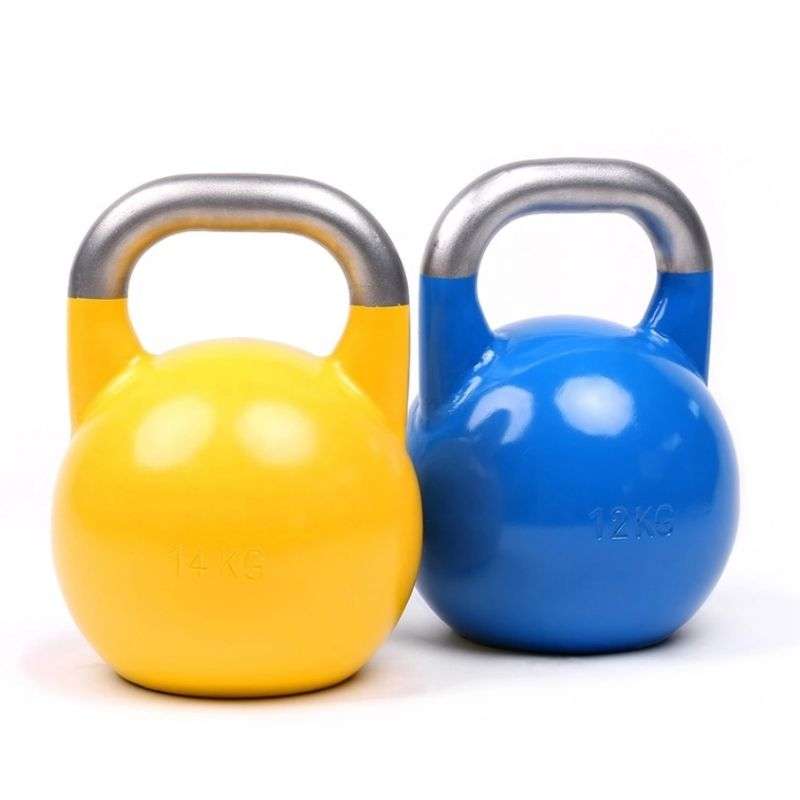
Urethane Kettlebell
$5.00YR Fitness KBC002 Urethane Kettlebell features a consistent size across all weights with a comfortable, chrome-fini
-

Urethane Kettlebell
$4.00YR Fitness KBP001 Urethane Kettlebell is built for serious training with consistent size and handle across all weig
-

Vinyl Kettlebell
$4.00YR Fitness Vinyl Kettlebell KBV001 is built for strength and full-body training. Made from solid cast iron with a v
-

Cast Iron Kettlebell
$5.00YR Fitness KBI001 Cast Iron Kettlebell is built for strength, endurance, and functional workouts. With its solid ca
-

Urethane Kettlebell
$5.00YR Fitness KBC001 Urethane Kettlebell is built for serious training with consistent size, strong grip, and long-las
-

Gymnastic Ring
$5.00YR Fitness Gym Ring GR02 is made from strong birch wood and comes with quick-adjust nylon straps for easy setup. Gr
Certified by Global Standards
Backed by CE, TÜV, and ISO certifications so you can buy with full confidence in safety and performance.

DESIGNED By ATHLETES,
FOR ATHLETES
At YR Fitness, Design Transcends Aesthetics.
It’s About Functionality.
Simple, But Significant.


Only True Feedback Counts
Quality Standard of YR Fitness
That’s why we are confident to compete with big brand quality, but at 1/5 price.
Built with Strength: 3.0mm Solid Steel Pipes
We use thick 3.0mm+ Q235 steel pipes for every part of the machine — whether it’s the frame or the training area, no matter the size. With added reinforcement bends, our machines stay strong and steady. No shaking, just solid power.

This is How We Make Your Gym Equipment
Over 20 years, YR Fitness has put $8M into tech—just to bring you better machines.
100% Original Design Since 1997
Because Great Design Makes Great Machines.
Pulley Output Ratio
Leveraging the power of physics, we’ve tailored our pulley output ratio for optimal training. Take our butterfly machines: a 2:1 ratio means a 70kg weight selection delivers a 35kg training load. This higher ratio enhances your workout and saves on weight plate costs.

Compare Our Key Series
73 Series
Heavy-Duty Frame
Pro-Level Movement
High-End Line
61A Series
Durable
Affordable
Best-Selling
C4 Series
Modern Look
Upgraded Fusion
More Features
Quick Comparison At A Glance
Feature | 73 Tough Series | 61A Racing Series | C4 Revival Series |
|---|---|---|---|
Launch Year | 2008 | 2016 | 2025 |
Design Focus | High-end performance and biomechanics | Space-saving, budget-friendly, market-driven | Combines 61A’s simplicity with 73’s advanced features |
Frame Tubing | 75×130×3.0 mm (main) + 58×101×3.0 mm (functional) | 75×118×3.0 mm (main) + 50×120 / 40×80 / 50×100 mm | 150×50×3.0 mm (main) + 50×120 / 40×80 / 50×100 mm |
Aesthetic Design | Parabolic, bold, aluminum accents | Compact and practical | Stylish, modern, fits younger gym aesthetics |
Durability Level | Heavy-duty, custom-engineered components | Very durable, many still running after 20+ years | Same durability level with upgraded styling and adjustability |
Movement Types | Independent converging/diverging paths | Standard movement paths | Includes both standard and independent paths (split models) |
Adjustability | Basic adjustability | Standard user adjustability | Advanced: rotating handles, adjustable pads, backrests, etc. |
Innovation Level | First of its kind globally in 2008 | Refined through years of customer feedback | Integrated innovation from both series + unique new machines |
Series Size | 62 models | 62 models | 74 models (still expanding) |
Target Buyer | High-end gyms, serious training centers | Budget-conscious gyms, franchise chains | Gyms that want both performance and style |
Pricing | Premium | Most affordable | Mid-range, with excellent feature-to-price ratio |
Production Method | Partially handmade due to complex design | Fully industrialized | Industrial production with some specialty detailing |
After-Sales Service | Lifetime support | Lifetime support | Lifetime support |
Let’s Talk

Blake Fisher
Gym Owner from Malaysia
Our members love using this. Super strong with top engineering. Great quality at an affordable price. Smooth to operate, can handle big weights and hits the target muscle. We are very satisfied for these gym machines! We plan on opening another gym once the virus is over.

Jay Dang
Gym Owner from Australia
Commercial quality. Well made. I feel it is just as good as the other top brand benches we have at our club eg Technogym, Matrix etc, but is so much more affordable. All of my order arrived on time and the sales manager was awesome to communicate with. Highly recommend!!!

Steve
Gym Owner from USA
The Quality is very nice, I really like them. All my clients are happy with my new equipment. I will work hard to promote them in Poland.

Allan
Distributor from Poland
Functional Training Equipment Supplier – The Definitive FAQ Guide
1. What equipment do I need to start a small functional training area?
You can start a small functional training area with one compact rig or rack, one functional trainer or cable machine, and a basic set of free weights and accessories.
Start with the core pieces first. A wall or corner rig, a functional trainer, one or two adjustable benches, and a small set of dumbbells, kettlebells, and medicine balls can already support many workouts. Add a few resistance bands and maybe a suspension trainer to cover pulling and core work. This setup fits in a small zone but still serves many members.
At YR Fitness, we focus on commercial-grade rigs, cable machines, benches, and accessories that can handle daily use in busy gyms. Our frames, pulleys, and handles are built for strength and long life, so you do not need to replace them often. If you share your floor size and member load, we can suggest a simple starter package that fits your space and budget.
3. How do I choose equipment that works for beginners, athletes, and older members?
Choose commercial equipment with smooth motion, easy adjustments, and a wide load range so coaches can scale the same tools for every member.
Look for functional trainers with fine weight steps and simple pin changes. This lets a new member start light and an athlete go heavy on the same machine. Rigs and racks should offer many height options and clear anchor points for bands and suspension trainers. This helps coaches quickly adjust exercises for older members who need lower or more stable positions.
At YR Fitness, we build commercial equipment to be used by all kinds of users, from beginners to advanced athletes. Our cable machines, rigs, and accessories focus on stable frames, proper movement paths, and strong parts, so they feel safe even at light loads. This lets your staff scale intensity with coaching, not with different machines for each group.
5. Can I integrate my existing strength machines with new functional training equipment?
Yes, you can keep your current strength machines and add functional training equipment around them to create a more complete gym.
Many members still like fixed-path machines for simple strength work. You can keep these machines and use open floor areas, corners, or walls for rigs, racks, and functional trainers. This gives members a choice between guided movements and free, multi-joint exercises. It also lets you upgrade step by step instead of replacing everything at once.
At YR Fitness, we focus on commercial functional equipment that fits beside standard strength lines. Our rigs, cable machines, and storage racks can be placed near your existing machines without blocking walkways. We can review your floor plan and suggest where to place new functional pieces so flow and safety stay strong. This way you protect your past investment and still modernize your training offer.
7. Should I choose a wall-mounted rig or a free-standing rig?
Choose a wall-mounted rig if you have limited space, and a free-standing rig if you want more training stations and access from all sides.
Wall-mounted rigs save floor area and keep the center of the room open. They work well along long walls or in narrow spaces and are often enough for smaller gyms. Free-standing rigs create a clear “training island” that many people can use at once. They usually offer more pull-up, bar, and anchor options but need more space and careful layout.
At YR Fitness, we build both wall-mounted and free-standing rigs for commercial use only. Our wall rigs are made to bolt securely into solid walls and floors, while our free-standing rigs use heavy-duty bases and frames. We can help you choose based on your wall type, ceiling height, and member volume.
9. How much weight should my functional trainer or cable machine handle for gym use?
For commercial gym use, your functional trainer or cable machine should handle at least 80–90 kg per stack, and more if you train strong athletes.
Light stacks that are fine for home use often feel too easy for stronger members. In a commercial gym, you want stacks heavy enough that advanced users can still challenge themselves, especially on rows, presses, and pulldowns. Dual-stack machines should also allow enough weight per side, not only in total.
At YR Fitness, we build commercial cable machines with larger weight stacks and smooth resistance so both beginners and strong members are covered. Our designs focus on heavy-duty frames, quality pulleys, and proper cable routing, so the load feels consistent across the full range of motion.
11. What materials should I look for to make sure the equipment is durable?
Look for thick steel frames, quality welding, strong cables, and wear-resistant parts like rubber, upholstery, and grips.
For rigs, racks, and frames, the steel should be thick and feel heavy, not flimsy. Welds should look clean and even, with no gaps or sharp edges. Cables should be steel with proper coating, and pulleys should turn smoothly without noise. Pads and grips should feel firm and not peel or crack easily.
We at YR Fitness use commercial-grade steel, industrial cables, and high-quality rubber and upholstery in our equipment. Our goal is to reduce wear in busy gyms so you are not always fixing grips, pads, and small parts. This means fewer replacements and less downtime for your members. When you review specs, you can use YR Fitness materials as a benchmark for durability.
13. What load capacity should my storage racks and wall mounts have?
Your storage racks and wall mounts should handle more than your heaviest planned load, with extra margin for safety.
If you plan to store many kettlebells, plates, or balls, total weight adds up fast. Make sure each tier and post has a stated load capacity from the manufacturer. The rack should not bend, shake, or lean when fully loaded. Wall mounts must be installed into solid structure, not just drywall, to safely hold ropes, bars, or suspension trainers.
We at YR Fitness design storage and wall systems specifically for commercial weight loads. Our racks and mounts are built to hold heavy sets of plates, kettlebells, and balls without sagging. We also give clear guidance on proper mounting and load use. If you share what you want to store, YR Fitness can help you choose racks and mounts with enough capacity and safety margin.
15. Are suspension trainers, battle ropes, and sleds safe for heavy daily use?
Yes, they are safe for heavy daily use if they are commercial grade, anchored correctly, and checked regularly.
Suspension trainers and battle ropes must be attached to strong anchor points that can handle dynamic loads. The straps, stitching, and rope ends should be made for commercial use, not light home workouts. Sleds should have solid welds, smooth runners, and handles that do not loosen under pushing and pulling. Regular checks help you spot wear before it becomes a safety problem.
At YR Fitness, we offer functional accessories and anchors designed for busy gyms that run many classes and sessions each day. Our focus is on strong materials and secure mounting to support repeated heavy use. We also encourage simple inspection routines so coaches or staff can catch frayed straps, worn ropes, or loose bolts early.
17. How thick should the flooring be under functional training equipment?
Most functional training areas need rubber flooring in the 8–15 mm range, and thicker where heavy drops or sled work happen.
Under rigs, racks, and general movement, 8–10 mm rubber tiles or rolls are often enough to protect the floor and reduce noise. If you have heavy lifting or frequent dropping, you may want 10–15 mm or dedicated lifting tiles. Good flooring should feel firm but slightly shock-absorbing, not soft like foam. It also needs a surface that grips shoes but is easy to clean.
We at YR Fitness design equipment to work well with standard commercial rubber flooring thickness. Our rigs and racks have base plates and foot designs that spread the load over the floor. This helps protect your subfloor and keeps the frame stable over time. When you share your training style, we at YR Fitness can suggest suitable flooring ranges to match your equipment and usage.
19. How do I organize functional equipment so the area looks clean and safe?
Use clear storage for every item, keep walkways open, and return gear to the same place after each session.
Start by grouping similar tools together: kettlebells in one rack, balls in another, bands and ropes on hooks. Place storage close to where people train so they do not carry heavy items across the gym. Keep the main movement lanes free of clutter and cords. Train staff to reset the area after classes so the zone always looks ready and safe.
We at YR Fitness design storage systems that match our rigs, racks, and accessories. Our shelves, hooks, and racks help you give every item a “home,” which makes it easier for members to return gear. This keeps your zone tidy and reduces trip hazards and lost items. When you build your layout with YR Fitness, we can suggest storage setups that support both safety and a clean, professional look.
21. How often do I need to inspect and tighten bolts on rigs and racks?
Inspect and tighten bolts at least once a month, and more often if your rig or rack is used heavily.
Bolts can loosen over time from pull-ups, band work, and bar drops. A quick monthly check with the right tools helps keep the frame stable. Focus on base plates, crossmembers, pull-up bars, and any attachments that move. After any big layout change or new install, re-check bolts after the first few weeks of use.
We at YR Fitness design rigs and racks with strong hardware and connection plates, but regular checks are still important. Our assembly guides highlight key bolt areas that should be inspected in commercial settings. We recommend simple log sheets so staff can track when checks were last done.
23. What accessories should I buy as backup in case something breaks?
Keep backup bands, suspension straps, ropes, handles, and key small parts so you can swap them out quickly if one fails.
Start by listing the accessories you use every day in classes and open gym. For those high-use pieces, it is smart to have at least one spare for each type on the shelf. Backup carabiners, cable handles, and ankle straps are also helpful, because they are small but critical. A simple labeled bin or drawer for spares makes replacements fast for your staff.
We at YR Fitness can suggest which accessories to double up on based on your program and member volume. Our range includes bands, straps, ropes, and cable attachments designed for commercial use, so your backups match your main tools. When you order from YR Fitness, you can add a small “spare parts kit” with your main equipment order.
25. What load capacity should my storage racks and wall mounts have?
Choose storage racks and wall mounts with a rated capacity well above your heaviest planned load, with extra safety margin.
First, estimate the total weight you want on each rack or hook. Add up kettlebells, dumbbells, balls, or plates that will sit on one level or hang from one point. Then pick storage with a higher rated capacity than that number, not the same. For wall mounts, remember that dynamic loads from pulling and dropping can be higher than the static weight.
We at YR Fitness build storage and wall systems for commercial loads, not just light home use. Our racks, hooks, and anchor points are designed to hold full sets of weights and accessories without bending or sagging. When you share your equipment list, we at YR Fitness can help you match each rack or mount to the load it must carry.
2. What are the must-have functional training tools for a commercial gym?
The must-have tools are a rig or rack system, a functional trainer, durable free weights, and key accessories like bands, balls, ropes, and benches.
The rig or rack is the base of your zone. It gives anchor points for pull-ups, bands, and suspension trainers, and supports barbell work if needed. A functional trainer or cable machine adds smooth, adjustable resistance for many movement patterns. Around these, you need dumbbells, kettlebells, medicine or slam balls, and a few plyo boxes to cover most strength and power needs.
We at YR Fitness design rigs, cable machines, and accessories specifically for commercial gyms, with thicker steel, stable frames, and smooth motion. Our storage racks help keep bands, balls, and ropes in order so your area stays clean and safe for members and coaches.
4. Do I need different equipment for group classes versus open gym use?
You do not need completely different equipment, but you should choose pieces that work well for both group classes and open gym.
For group classes, you need gear that many people can share at the same time. Lighter kettlebells, dumbbells, medicine balls, and bands in multiple pairs work well for this. For open gym, you can add heavier options and a few specialty pieces for advanced users. The key is to buy equipment that is durable and easy to move so staff can reset the room fast.
At YR Fitness, we design commercial equipment that fits both uses in one zone. Our rigs, functional trainers, and accessories are made for high member traffic all day. This means you can run a class and then switch to open gym without changing the setup. We at YR Fitness can help you build one layout that serves both formats to save cost and floor space.
6. How much space do I need for a functional training rig or frame?
Most gyms need about 10–20 square meters for a small rig area, including safe space to move around it.
The rig size itself is only part of the story. You must also allow room for users to lunge, step, swing, and move around each side. A simple wall rig can work in a narrow strip if you keep accessories stored well. A free-standing rig needs more space on all sides so members do not bump into each other or other equipment.
We at YR Fitness design rigs and frames in different lengths and heights to fit many room sizes. Our team usually looks at your floor plan, ceiling height, and member flow before giving a size suggestion. We can show you example layouts of 10, 15, and 20 square meter zones to see what fits your gym.
8. What is the difference between a functional trainer and a cable crossover?
A functional trainer has adjustable arms and more movement options, while a cable crossover is wider and mainly used for two-sided chest and upper-body work.
A functional trainer usually has pivoting arms and height-adjustable pulleys. This lets members perform many angles of pushing, pulling, rotation, and lower-body assistance work. A cable crossover is more fixed, with tall frames and pulleys that slide up and down, often used for chest flies and some back or shoulder moves.
At YR Fitness, we design commercial functional trainers to support a wide range of full-body patterns with smooth pulleys and precise adjustments. Our cable machines and crossovers are built with heavy-duty frames and strong cables for long-term gym use. Many gym owners start with a functional trainer because it covers more needs per square meter.
10. How do I know if functional training equipment is commercial grade?
Commercial-grade equipment uses thicker steel, stronger parts, and is built for all-day use in busy gyms.
You can first look at the frame. Commercial equipment usually has heavier, thicker steel and a solid, stable base. Weight stacks are larger, and moving parts like pulleys and bearings feel smooth, not loose. The brand should clearly mark it as “commercial” or “full commercial,” not “home” or “light commercial.”
At YR Fitness, we focus on full commercial equipment made for gyms, studios, and clubs, not home garages. Our products use heavy-duty frames, larger stacks, and high-quality materials to handle many users each day. We test our machines and rigs to stand up to the same level as big global brands, but with more cost-effective pricing.
12. What safety features should I check before buying rigs and racks?
Check that rigs and racks have stable frames, secure anchor points, proper hole spacing, and clear ways to lock or support the load.
A safe rig should not wobble when you pull, swing, or rack weight. Uprights must be thick enough, and the base should bolt firmly to the floor or have a heavy, wide footprint. Hole spacing should allow safe bar positions for different heights, and J-hooks and safety arms should lock in place. All edges and corners should be smooth to reduce risk of cuts and tears.
At YR Fitness, we design rigs and racks with safety in mind for commercial gyms that run all day. Our models use heavy uprights, strong connection plates, and quality hardware that stay solid even under heavy loads. We also pay attention to attachment design, so hooks, arms, and anchors are easy to adjust yet secure when locked.
14. How much weight storage do I need for kettlebells, balls, and free weights?
Plan storage so every kettlebell, ball, and free weight has a clear place, with some extra room for future growth.
Start by listing the sizes and quantities you own or plan to buy. Count your dumbbell pairs, kettlebell sizes, and ball weights, then match them to racks with enough tiers and length. It is better to have a bit more space than to pile items on the floor, which looks messy and can be unsafe. Good storage also makes it easier for staff and members to reset the area between sessions.
At YR Fitness, we design storage systems to match typical commercial sets of free weights and functional tools. Our multi-level racks help you keep kettlebells, balls, and dumbbells in order so members can find what they need fast. This keeps your functional zone clean and reduces trip hazards.
16. How do I anchor suspension trainers, ropes, and bands correctly?
Anchor suspension trainers, ropes, and bands into solid structure (concrete, steel, or strong beams), never into weak walls or ceilings.
Use purpose-made anchor plates or brackets that are rated for dynamic loads. Mount them into concrete, steel, or solid wood beams with the right bolts or expansion anchors. Test each anchor with bodyweight before you let members use it in classes. Keep the anchor height consistent so coaches can set up stations quickly.
At YR Fitness, we design rigs and wall systems with built-in anchor points for ropes, bands, and suspension trainers. This avoids random drilling into weak spots and keeps your anchors where the frame is strongest. Our commercial rigs and racks are made to take repeated pulling and swinging loads in busy gyms.
18. What is the best type of flooring for sled pushes and heavy use?
Dense rubber flooring or dedicated sled tracks with a tough surface are best for sled pushes and heavy use.
Softer mats can bunch up, tear, or slow the sled too much. A dense rubber floor or turf designed for sleds lets the sled glide while still protecting the floor. The surface should handle friction, metal runners, and weight without peeling. You also want a lane long enough for meaningful pushes, not just a few short steps.
At YR Fitness, we test our sleds and heavy-use equipment on standard commercial rubber and sled turf surfaces. Our goal is to match runner design with real gym flooring so performance stays consistent. We can share guidance on what types of floors work best with our sleds and heavy tools.
20. How should I maintain and clean functional training equipment daily and weekly?
Clean contact surfaces daily and check moving parts weekly so the equipment stays safe, smooth, and hygienic.
Each day, wipe down handles, pads, benches, and high-touch areas with suitable cleaner. Pick up loose bands, small accessories, and check for any obvious damage. Once a week, look at cables, carabiners, anchor points, and adjustment pins to make sure they move well and lock correctly. This simple routine helps you catch small issues early.
At YR Fitness, we build equipment to handle long-term use with basic care. Our frames, cables, and finishes are chosen to resist sweat, cleaning chemicals, and constant handling. We can provide simple maintenance checklists for our rigs, cable machines, and accessories. When you follow these routines with YR Fitness equipment, you help extend product life and reduce downtime.
22. Which pieces of functional training equipment wear out the fastest?
Small accessories like bands, suspension straps, grips, and battle ropes usually wear out faster than big frames and machines.
These items get stretched, pulled, dropped, and handled all day. Over time, fabric, stitching, rubber, and rope fibers can fray, crack, or lose tension. High-use group classes speed this up even more. That is why you should plan to replace small accessories more often than rigs, racks, or cable machines.
We at YR Fitness build heavy frames and machines to last many years in busy gyms, but we know small parts take more day-to-day stress. Our goal is to use better materials even on “consumable” items so they last longer before you need new ones. We can help you plan a realistic replacement cycle for bands, straps, ropes, and grips based on your class schedule.
24. How long does high-quality functional training equipment usually last in a busy gym?
High-quality frames and machines can last many years in a busy gym if they are commercial grade and maintained well.
Rigs, racks, and cable machines made with thick steel and strong parts often stay in service for 8–10 years or more. Their life depends on daily load, environment, and how well you keep them clean and tight. Small accessories will need replacement sooner, but the main structures should stay solid for a long time. Regular checks and simple maintenance help you reach the upper end of that range.
We at YR Fitness design functional training equipment for long life in real commercial conditions, not just brochure photos. Our frames, cables, and joints are chosen to stand up to heavy use, with parts that can be serviced when needed. If you follow basic care routines, YR Fitness rigs, racks, and machines can serve your members for many years.