




Multi Gym Series
Built by athletes, for athletes.
Built tough to handle every strength training.
Built with precise movement angles since 1997.
Products We Have for You
Showing 10–14 of 14 results
-

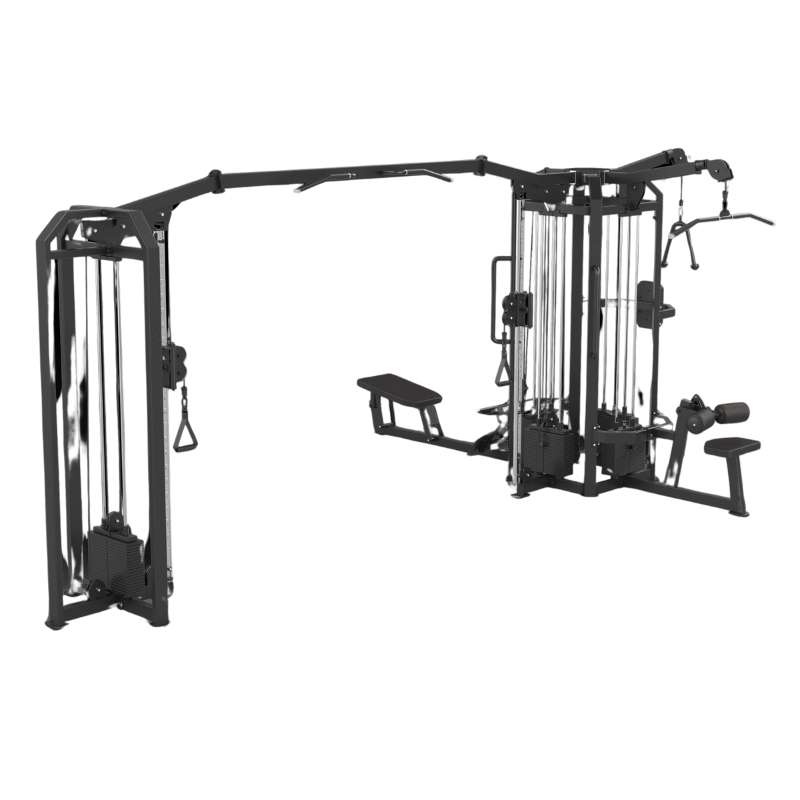
9 Station Multi Jungle
$5.00YR Fitness 9 Station Multi Jungle 6280B is a versatile training system designed for group workouts and multiple str
-

14 Station Multi Jungle
$5.00YR Fitness 14 Station Multi Jungle 6280C is a powerful, space-saving solution for group training. It supports up to
-

3 Station 6 Function Trainer
$5.00YR Fitness 3 Station 6 Function Trainer 5336 offers a full-body workout in one machine. With six key functions and
-

Smith & Functional Trainer Combo
$4.00YR Fitness Smith & Functional Trainer Combo 8504 is a space-saving machine that combines a smooth Smith system
-

Smith & Functional Trainer Combo
$4.00YR Fitness Smith & Functional Trainer Combo 8502 combines two powerful training systems in one space-saving des
Certified by Global Standards
Backed by CE, TÜV, and ISO certifications so you can buy with full confidence in safety and performance.

DESIGNED By ATHLETES,
FOR ATHLETES
At YR Fitness, Design Transcends Aesthetics.
It’s About Functionality.
Simple, But Significant.


Only True Feedback Counts
Quality Standard of YR Fitness
That’s why we are confident to compete with big brand quality, but at 1/5 price.
Built with Strength: 3.0mm Solid Steel Pipes
We use thick 3.0mm+ Q235 steel pipes for every part of the machine — whether it’s the frame or the training area, no matter the size. With added reinforcement bends, our machines stay strong and steady. No shaking, just solid power.

This is How We Make Your Gym Equipment
Over 20 years, YR Fitness has put $8M into tech—just to bring you better machines.
100% Original Design Since 1997
Because Great Design Makes Great Machines.
Pulley Output Ratio
Leveraging the power of physics, we’ve tailored our pulley output ratio for optimal training. Take our butterfly machines: a 2:1 ratio means a 70kg weight selection delivers a 35kg training load. This higher ratio enhances your workout and saves on weight plate costs.

Compare Our Key Series
73 Series
Heavy-Duty Frame
Pro-Level Movement
High-End Line
61A Series
Durable
Affordable
Best-Selling
C4 Series
Modern Look
Upgraded Fusion
More Features
Quick Comparison At A Glance
Feature | 73 Tough Series | 61A Racing Series | C4 Revival Series |
|---|---|---|---|
Launch Year | 2008 | 2016 | 2025 |
Design Focus | High-end performance and biomechanics | Space-saving, budget-friendly, market-driven | Combines 61A’s simplicity with 73’s advanced features |
Frame Tubing | 75×130×3.0 mm (main) + 58×101×3.0 mm (functional) | 75×118×3.0 mm (main) + 50×120 / 40×80 / 50×100 mm | 150×50×3.0 mm (main) + 50×120 / 40×80 / 50×100 mm |
Aesthetic Design | Parabolic, bold, aluminum accents | Compact and practical | Stylish, modern, fits younger gym aesthetics |
Durability Level | Heavy-duty, custom-engineered components | Very durable, many still running after 20+ years | Same durability level with upgraded styling and adjustability |
Movement Types | Independent converging/diverging paths | Standard movement paths | Includes both standard and independent paths (split models) |
Adjustability | Basic adjustability | Standard user adjustability | Advanced: rotating handles, adjustable pads, backrests, etc. |
Innovation Level | First of its kind globally in 2008 | Refined through years of customer feedback | Integrated innovation from both series + unique new machines |
Series Size | 62 models | 62 models | 74 models (still expanding) |
Target Buyer | High-end gyms, serious training centers | Budget-conscious gyms, franchise chains | Gyms that want both performance and style |
Pricing | Premium | Most affordable | Mid-range, with excellent feature-to-price ratio |
Production Method | Partially handmade due to complex design | Fully industrialized | Industrial production with some specialty detailing |
After-Sales Service | Lifetime support | Lifetime support | Lifetime support |
Let’s Talk

Blake Fisher
Gym Owner from Malaysia
Our members love using this. Super strong with top engineering. Great quality at an affordable price. Smooth to operate, can handle big weights and hits the target muscle. We are very satisfied for these gym machines! We plan on opening another gym once the virus is over.

Jay Dang
Gym Owner from Australia
Commercial quality. Well made. I feel it is just as good as the other top brand benches we have at our club eg Technogym, Matrix etc, but is so much more affordable. All of my order arrived on time and the sales manager was awesome to communicate with. Highly recommend!!!

Steve
Gym Owner from USA
The Quality is very nice, I really like them. All my clients are happy with my new equipment. I will work hard to promote them in Poland.

Allan
Distributor from Poland
Commercial Multi-Station Gym Equipment – Definitive FAQ Guide
1. What are the different types of multi-station gym equipment?
The main types are compact 2–3 station units, larger 4–8 station “jungle gyms,” and cable-based systems, all built in commercial grade at YR Fitness. This includes popular setups such as a 4 Station Gym Machine and larger configurations like an Eight Station Gym Machine used in busy commercial gyms.
Compact multi gyms usually combine key stations like lat pulldown, low row, and chest or shoulder press on a smaller frame. These work well for studio gyms, hotel gyms, and small commercial spaces where every square meter matters. Larger jungle gym systems connect more stations, such as leg extension, leg curl, and adjustable pulleys, so several people can train at the same time on one integrated rig.
At YR Fitness, we focus only on commercial-grade equipment, not home use. We design different multi-station layouts so gym owners and distributors can match the right type to their floor plan, member profile, and budget. If you share your space size and training needs, we can suggest suitable multi-station models that cover all main movements with the least number of machines.
3. What are the advantages of multi-station gym equipment over other strength training machines?
A multi-station gym saves floor space and budget by putting many strength stations on one frame, while still giving members a full and smooth workout.
Instead of buying separate machines for each movement, you can cover many key exercises with one multi-station system. This reduces the total footprint and often lowers your cost per training station. For new clubs and upgrades, that means more open space for members and a cleaner layout that is easier to manage and supervise.
At YR Fitness, we design multi-station units for commercial gyms that need efficient use of space without losing training quality. Our equipment offers guided paths that help beginners train safely, while cable stations give advanced users enough variety for isolation work and functional moves.
5. Can this equipment support heavy lifters and athletes, not just casual users?
Yes, a well-designed commercial multi-station gym can support heavy lifters and athletes, as well as beginners and casual users.
Commercial multi gyms use stronger frames, higher weight stacks or plate capacities, and better-quality components than light home machines. This allows serious lifters to train with challenging loads while still keeping motion smooth and controlled. At the same time, the guided paths and clear setup make it easy for less experienced members to train safely on the same equipment.
We at YR Fitness design our commercial lines to serve a wide range of users in one club. Our team focuses on correct biomechanics and joint paths so the movement feels safe at both light and heavy weights.
7. Is multi-station gym equipment the right choice for commercial purposes?
Yes, a commercial multi-station gym is a smart choice for many commercial gyms because it gives many exercises in a compact space.
One multi-station unit can cover key upper body and sometimes lower body moves, so you do not need to buy separate machines for every muscle group. This keeps your layout clean and saves budget.
We at YR Fitness design our multi-station lines for real club traffic, with strong frames and smooth movement that trainers recognize and trust. If you want to make good use of limited space and still offer a complete strength area, our team can help you pick the right multi-station setup for your project.
9. How much floor space do I need for a multi-station gym?
You need space for the machine’s footprint plus extra room around it so members can move and use cables safely.
Each model has its own length and width, but you should always leave clear space for seats, arms, and users to move without hitting walls or other machines. It is also important to keep walkways open so traffic flows well at peak times.
At YR Fitness, we give full size data and can review your floor plan to help you place multi-station units in the best spots. If you send us your room layout, we can suggest how many units you can use and how to arrange them.
11. How many users can train at the multi-station gym at the same time?
Most commercial multi-station gyms can be used by 2–8 people at the same time, depending on how many stations are built into the frame.
A compact unit may only allow 2–3 users at once, while a large “jungle” system can handle more people if each station has its own access side. The real number also depends on how your members move and if some stations share the same weight stack.
At YR Fitness, we focus on commercial layouts for gym owners and distributors, so our team can suggest multi-station models and setups that match your member flow and business needs before you place an order.
13. Is the multi-station gym safe for beginners to use without a trainer?
Yes, a well-designed commercial multi-station gym is beginner friendly, but basic instruction and clear rules are still important.
Commercial machines are built to guide the movement and to serve users from beginners to advanced athletes, with settings that can be adjusted to different body sizes. Clear diagrams, smooth paths, and simple pin or seat changes help new members feel safe.
At YR Fitness, our design work focuses on correct movement angles and ergonomics, so the exercise line is stable and easy to follow. We still suggest that gym owners give short orientation sessions and post usage guides, and our team can share equipment information that helps you set up safe basic instructions in your club.
15. Can you customize parts of the multi-station gym equipment?
Some parts of a multi-station gym can often be customized, such as configuration, attachments, or look, while core frame design usually follows standard models.
Most commercial makers keep the main frame and movement path fixed for safety and certification, but can offer options on station combinations, handle or attachment choices, and color schemes. For distributors and gym owners, this helps the equipment match your brand style and your members’ training needs.
At YR Fitness, we design and manufacture our own commercial lines and mainly serve gym owners and equipment distributors, so our team can discuss practical customization options for your project. If you share your logo, color ideas, and preferred station mix, we can advise what is realistic and cost-effective before you confirm your order.
17. Do you provide installation and setup service on-site?
On-site installation depends on your location and project size, but we always support you with clear assembly information and after-sales help.
We at YR Fitness are a commercial manufacturer in China, so our core work is design, production, and export of gym equipment. For many projects, local teams or partners handle the physical installation, using our assembly guides and support.
Our assured after-sales service and quick response help reduce your worries during setup and operation. If you tell us where your gym is and how big the project is, our sales team can explain what install support is realistic in your area and how we can assist your installer step by step.
19. Can I order spare parts easily if something breaks?
Yes, you should be able to order spare parts, and we at YR Fitness support this through our after-sales service.
In a commercial gym, even strong equipment will need parts over time, such as cables, pulleys, or pads. It is important that your supplier can identify parts quickly and ship replacements without delay. YR Fitness works as a B2B commercial brand for gym owners and distributors and promises assured after-sales plus quick response, usually within 24 hours.
If you keep your equipment list and serial details, our team can help you match the correct spares and arrange shipment so your multi-station gym comes back to full use as soon as possible.
21. How often should I inspect and service the equipment in a busy gym?
In a busy gym, you should do quick visual checks daily, simple manual checks weekly, and deeper inspections on a monthly or quarterly schedule.
Daily, staff can look for obvious problems such as frayed cables, loose pins, strange noises, or damaged pads. Once a week, you can have a short routine to test full movement, check bolts, and clean dust from key areas. Then, on a monthly or quarterly plan, you or a technician can review the whole multi-station gym in more detail.
As a commercial manufacturer, we at YR Fitness design equipment for heavy use and can share maintenance guidance to match your traffic level, so you keep members safe and protect your investment over the long term.
2. What are the different features of multi-station gym equipment?
A good multi-station gym combines several exercise stations, easy adjustments, and heavy-duty parts in one compact commercial frame, which is how we design them at YR Fitness.
Most commercial multi gyms include core stations like lat pulldown, seated row, chest or shoulder press, and adjustable pulleys for arms and core. Many also add leg extensions, leg curls, and multiple attachment points so members can do a full-body workout without moving across the room.
We at YR Fitness pay close attention to movement angles, seat positions, and handle paths, so the machine feels natural for both beginners and advanced lifters. Our frames, cables, and upholstery are chosen for long-term use in busy commercial gyms.
4. Is the multi-station gym suitable for high-traffic commercial gyms?
Yes, as long as it is true commercial-grade equipment, a multi-station gym is made to handle high-traffic use in busy gyms.
Commercial multi stations use thicker steel, stronger welds, and higher-quality bearings and cables than home units. They are built to handle many users each day with repeated loading and unloading. This makes them a good fit for membership gyms, hotel clubs, and corporate fitness centers that stay busy during peak hours.
At YR Fitness, we manufacture only commercial-grade equipment and design it to bear long-term heavy use. We use solid materials and advanced production processes, so our multi-station gyms can work for years in demanding environments.
If you run or supply high-traffic facilities, we can help you choose models and station counts that keep queues shorter and equipment stable, so your members get a better training experience and you reduce service interruptions.
6. What is the difference between home-use and commercial multi-station gym equipment?
Home-use multi-stations are built for light personal training, while commercial multi-stations are built for heavy, daily use in professional gyms.
Home-use units usually have smaller frames, lighter parts, and limited weight capacity. They work fine for one or two people but cannot handle constant use. Commercial multi-stations have thicker steel, stronger cables, and larger weight stacks so they stay stable even with many users each day.
At YR Fitness, we design only commercial-grade equipment with proper biomechanics and long-lasting materials, making it suitable for gyms, studios, and clubs that need reliable performance. If you want help choosing the right commercial model for your facility, our team at YR Fitness can guide you based on your space and member needs.
8. What to consider before buying multi-station gym equipment?
You should think about your users, space, budget, and the supplier’s quality and support before buying a multi-station gym.
Ask who will use the machine (beginners, athletes, or mixed), how busy your gym is, and how the unit will fit with your other strength equipment. Then look at the build quality, design, and service.
At YR Fitness, our commercial lines are designed by a team with sports and biomechanics background and built to compete with big international brands at a more workable cost. If you share your room size, member type, and budget with us, we can suggest a multi-station plan that fits your business, not just the catalog.
10. What are the dimensions of multi-station gym equipment?
Most commercial multi-station gyms range from about 2–4 meters in length and 1.5–3 meters in width, with a height of around 2–2.4 meters, depending on the model.
These sizes fit the common footprint of 2–3 station units, mid-size 4–5 station frames, and larger jungle gym systems. Taller units with pull-up bars or cable towers may need more ceiling clearance. We at YR Fitness design our commercial multi-stations with clear, published measurements so gym owners can plan layouts more accurately.
Dimensions still vary from model to model because each multi-station has a different number of stations, frame shape, and function. If you share your room size and ceiling height, our team can recommend specific models that fit your space and training needs.
12. What is the weight stack capacity for each station?
Weight stack capacity changes by model and station, but commercial units from YR Fitness use larger stacks than typical home machines.
Full commercial equipment is built with heavier frames and larger weight stacks so it can handle a wide range of users, from beginners to advanced athletes. On many multi-station gyms, upper-body stations like lat pulldown and row will have higher stacks than small isolation stations.
We at YR Fitness design only commercial-grade equipment, so our stacks are sized for real club use, not light home workouts. If you tell us your member type and training style, our sales team can recommend models with stack capacities that fit your gym or your clients’ projects.
14. What is the average cost of multi-station gym equipment?
For commercial-grade multi-station gym equipment you should expect a price range of about US$5,000 to US$20,000+ depending on size and features.
- Entry Level: Entry-level commercial machines with fewer stations (say 2-4 stations) often begin around US$5,000 to US$8,000.
- Mid-sized: Mid-sized multi-station systems (4-6 stations) range around US$7,000 to US$12,000.
- Large Systems: Larger systems (8-14 stations or heavy custom builds) can go beyond US$15,000 and up, based on configuration and brand.
At YR Fitness, we offer commercial multi-station equipment with full commercial specifications and high build quality—designed for gym owners and distributors. Because we manufacture factory-direct, our pricing is more competitive relative to top international brands.
16. How long does delivery and installation usually take?
Delivery and installation time depends on your country, order size, and local install team, but commercial orders usually take several weeks from production to a fully set-up gym.
For export projects, shipping time is different for each region, and installation speed depends on how many units you have and who is handling the on-site work.
At YR Fitness, we focus on making delivery as smooth as possible: our sales team is experienced with logistics, and 90% of orders are delivered on time or even earlier. We also reply fast, usually within 24 hours, so you always know your order status.
If you share your country and project size, we at YR Fitness can give a more realistic delivery window and help you plan your installation schedule before you place the order.
18. What is the warranty coverage for the frame, cables, and moving parts?
Warranty terms are set by product and market, but commercial multi-station gyms normally have longer coverage on the frame and shorter coverage on moving parts.
Most commercial suppliers separate the warranty by component because frames, cables, and bearings wear at different speeds in a busy gym.
At YR Fitness, we focus on long-term use by using solid materials and advanced production for heavy-duty commercial quality, so many gyms keep our equipment in service for many years. We also promise assured after-sales service to remove your concerns on bulk orders and give quick replies when you need support.
Before you confirm an order, you can ask our team at YR Fitness for the exact warranty details for your chosen multi-station series so everything is clear in the contract.
20. What are the common maintenance issues with multi-station gyms?
Common issues include cable wear, loose bolts, noisy pulleys, and worn upholstery, especially in busy gyms.
Multi-station units work all day in commercial clubs, so moving parts slowly wear. Cables can fray, pulleys can get noisy if dry or dusty, and bolts may loosen over time. Pads and grips also wear from sweat and heavy use.
At YR Fitness, we design commercial equipment to bear long-term heavy use with strong frames and quality parts, but regular checks are still important for safety and smooth feel. When you buy from us, you can ask our team for basic maintenance tips and parts lists so your staff know what to watch and when to act.
22. How to maintain multi-station gym equipment in the gym?
To maintain a multi-station gym, keep it clean, check it often, fix problems early, and follow the maker’s instructions.
Simple habits such as wiping sweat from pads, keeping the area clear, and not allowing users to drop stacks help a lot. Regular checks on cables, pulleys, and bolts will catch issues before they become safety risks. When something looks damaged, it should be tagged out and repaired, not used.
We at YR Fitness build commercial equipment to last and back it with assured after-sales and quick responses to your questions. If you need a basic maintenance checklist for your team, you can contact our sales or support team, and we can share guidelines suited to your multi-station models and gym size.